

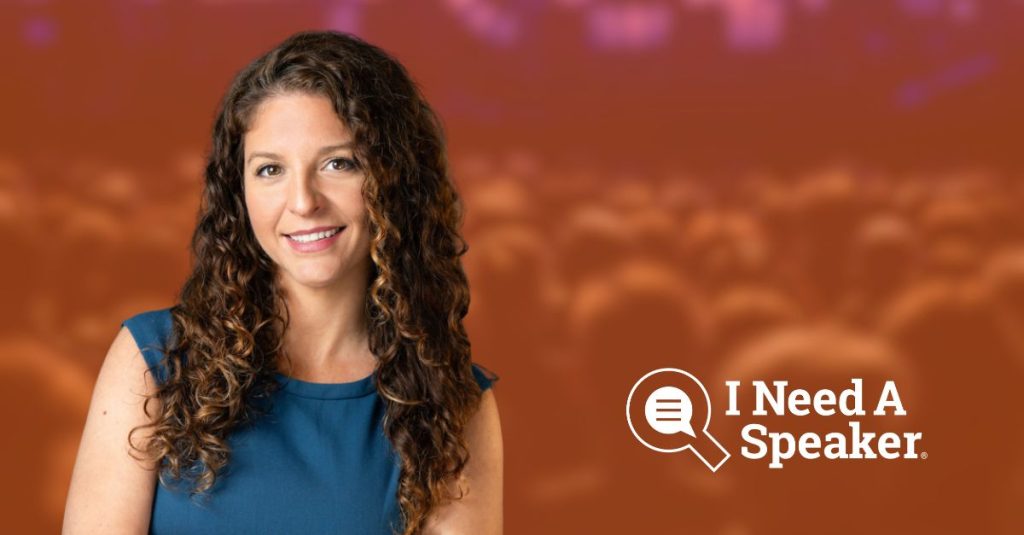
Authentic connection has become more valuable than ever, and mastering the art of trust-building from stage is essential for today’s speakers. Christy Renee Stehle, a magnetic storyteller and strategist, brings her decade of experience in content marketing and public speaking expertise to I Need A Speaker. Having captivated audiences at Mindvalley and beyond with her transformative approach to vulnerability and energy management, Christy is sharing how she builds trust through strategic storytelling that leaves audiences feeling personally addressed and deeply moved.
INAS: What do you believe are the universal elements of a trust-building presentation, regardless of the audience or setting?
- Shared understanding
- Strategically positioned credibility
- Addressing objections before they’re spoken
- Captivating and strategic story-weaving
- Personal stories that end with universal truths
- Vulnerability & humor
INAS: How do you typically research an audience before speaking to ensure your content resonates with their specific concerns or interests?
CR: Research starts in the discovery call. Rather than coming to the meeting with a speaking program to pitch, I get curious. What has worked in the past? Where are they looking to go? What problems do they want solved? That way I’m able to focus my expertise on specific problems I know the audience has. From there, I’ve shared Google Forms before corporate leadership programs and interviews, where possible, are also a great way to go deeper.
INAS: Can you describe a moment when you felt you truly connected with an audience, and what techniques contributed to that breakthrough?
CR: “And if you knew that crazy-impossible dream was waiting for you on the other side of fear, would you have the courage to face it?”
The year was 2019, the location: Mindvalley University Main Stage in Pula, Croatia. I was nearing the end of my keynote and had a radical plan. After their guided meditation, I’d invite them to face their fear of public speaking by joining me on stage for a moment with the mic. Several attendees knew of my plan prior and had staunchly refused. “I’m sorry, Christy, I’m not going to do that. I can’t,” they’d told me. But I knew I would lead them through that transformation anyway, despite their fear and protests. Here’s how I led 40 people to breakthrough using my language, energy, and presence:
- Vulnerability: I opened up about things I was ashamed of, things I’d rather the world never know, and they trusted me deeply for it. To use vulnerability strategically, align it with the Hero’s Journey. Ex: I was here, then came the obstacle, now I’m transformed and on the other side, and here is the lesson I’ve learned.
- 1st Person Storytelling with Universal Truth: Connection comes from shared understanding, so I didn’t just end my vulnerable share with the lesson I’d learned. When we share our in-the-moment experience and wrap it up with a universal truth that applies to us all, you create a chemical shift in your audience and they feel something.
- Energy Management: This was the first day I had proof of what I’d long suspected—energy is transferable. In her post-event testimonial, one of the young women who faced her fear after she told me she wouldn’t said, “For the first time in 18 years, I took to the stage and faced my fear because Christy’s vulnerability and authenticity became mine, her courage became mine, her unimaginable power and strength became mine.” I walked the audience through my own journey with courage, feeling into the emotions of fear, courage, and triumph, and the audience was with me for the ride.
INAS: What role does vulnerability or sharing personal experiences play in your approach to building trust with an audience?
CR: The deeper and more vulnerable we are as leaders, the deeper the trust from the audience. The trick is to make sure you’re healed from whatever it is you choose to open up about. If you aren’t 100% sure of the lesson you’ve learned from this “bad thing” you’re about to talk about, things could get messy.
INAS: How do you handle difficult questions or skepticism in a way that maintains audience trust rather than diminishing it?
CR: By being transparent. I’m quick to laugh at or make fun of myself, and I think that ability comes from confidence. Anyone who knows my journey knows I battled self-esteem issues and doubt for many years. But now? I know what I know and I’m okay with what I don’t.
If I know the answer to the difficult question, I’ll share a story (along with my internal narrative at the time of the experience) and pair it with the lesson I learned and a universal truth. In times where I haven’t known the answer, I’ve admitted it and turned to the audience to share their POV. Trust breaks when we try to be something we aren’t.
INAS: What non-verbal communication tactics have you found most effective for establishing credibility and connection?
CR: Only 7% of communication has to do with the words we speak. 38% comes from tone of voice, and a whopping 55% is categorized as “non-verbal.” I often close my trainings with, “Your energy tells your story before you ever even speak. What is your energy saying about you?” The energy we show up in has a profound effect on our ability to connect with and move an audience. I teach practices that open our hearts, clear our minds, and connect us to the present moment.
Whenever I share this, people inevitably tell me they don’t need to do energy rituals, that they show up ready and could do it on repeat. Yes and…Are you sure you’re creating a meaningful connection with your audience, or are you leading a one-way conversation?
INAS: How do you structure your presentations to build trust progressively throughout your time with an audience?
CR: Storytelling is a great gift and passion of mine, and because of that, I like to weave stories together intricately. I’ll tie golden threads together throughout my presentation much in the way comedians incorporate “Easter Eggs.” This style keeps them on the edge of their seats, and when an audience is captivated, they are invested; they trust.
Outside of that, it’s always a good idea to incorporate some reasons to trust you at the beginning. Not in stodgy language like, “you should trust me because…” but by connecting to what your audience cares about and giving them reasons to care about you. Addressing their objections before they’re spoken also goes a long way in establishing trust. You know what they’re thinking and beat them to the punch.
INAS: What differences have you noticed in building connection with in-person versus virtual audiences?
CR: I find virtual to be much harder to get that same tether of connection. Energy still transfers through the screen, it’s why we feel things watching great movies, and there are plenty of tricks to make virtual presentations more engaging. But when I’m in person, I can feel the energy of the room and meditate on the question, “What messages will be most impactful today? What do they need to hear?” I’ve changed parts of my presentations in-the-moment countless times because I feel led by the energy, facial expressions, and body language of the audience.
That said, I’ve received powerful testimonials from virtual speaking engagements, but the tether of connection only went one way. They felt it; I didn’t.
INAS: How do you adapt your trust-building approach when speaking to audiences from different cultural backgrounds?
CR: I’m fortunate that my younger self was courageous enough to sell my house and everything I owed to live across 35 countries as a digital nomad. This experience gave me my biggest education relating to connection and community.
What I learned is that there are certain human truths that connect us all. I’ve spoken in front of audiences with as many as 10+ countries represented, and the same “formula” of first-person storytelling plus a universal truth still lands. The lessons I talk about aren’t surface level, they’re deep and human.
INAS: What common mistakes do you see speakers make that unintentionally damage audience trust, and how can they be avoided?
CR: If you find yourself leaning on facts and information more than personal experience, you’re preventing your audience from feeling a meaningful connection with you. Use statistics to support your stories.
Opening with information will glue them to their phones while you speak instead of gluing them to you. Audiences connect through emotion, not information. Tell stories about yourself, tell stories about others, use facts to back those findings up. There is an art to strategic story weaving, and when done correctly, your audience will tell you they felt like you were speaking directly to them, that they felt like the only person in the room.
INAS: Any other general advice for planners, speakers, or even audience members?
CR: If you’re paying attention to trends and new research, you’ll see that from the start of 2025, planners are seeking speakers who give attendees what they want: a break from cookie-cutter presentations of the past.
As a speaker, let this be your invitation to show up more fully. How can you provide a more connected experience as you lead from stage? How can you encourage moments of connection between audience members, between the audience and yourself? Can you identify parts of your talk that are too informational or can be deepened with vulnerability?
In this disrupted era, consumers are demanding a beautiful thing. In response to the rise of AI, studies show we all want more authentic personal connection than ever before. Let’s give it to them.
—
As we navigate an era where audiences crave authentic human connection more than ever, Christi’s approach offers a refreshing alternative to information-heavy presentations. Her formula of vulnerability, first-person storytelling, and universal truths creates experiences that resonate across diverse audiences and cultural backgrounds.
Whether you’re planning your next event, hoping to elevate your speaking career, or simply seeking to connect more deeply with others, Christy’s insights remind us that true impact comes not from what we say, but how we make people feel. To bring Christy’s magnetic energy and transformative storytelling strategies to your next event, contact I Need a Speaker today.